Procurement Project – Keys takeaway

Procurement is a critical activity for every company given it has direct impact on operations, profitability, and strategic goals.

Companies can choose to have a dedicated department responsible for this function or alternatively delegate this responsibility to each line of business.

Here are some key considerations:
I am text block. Click edit button to change this text. Lorem ipsum dolor sit amet, consectetur adipiscing elit. Ut elit tellus, luctus nec ullamcorper mattis, pulvinar dapibus leo.

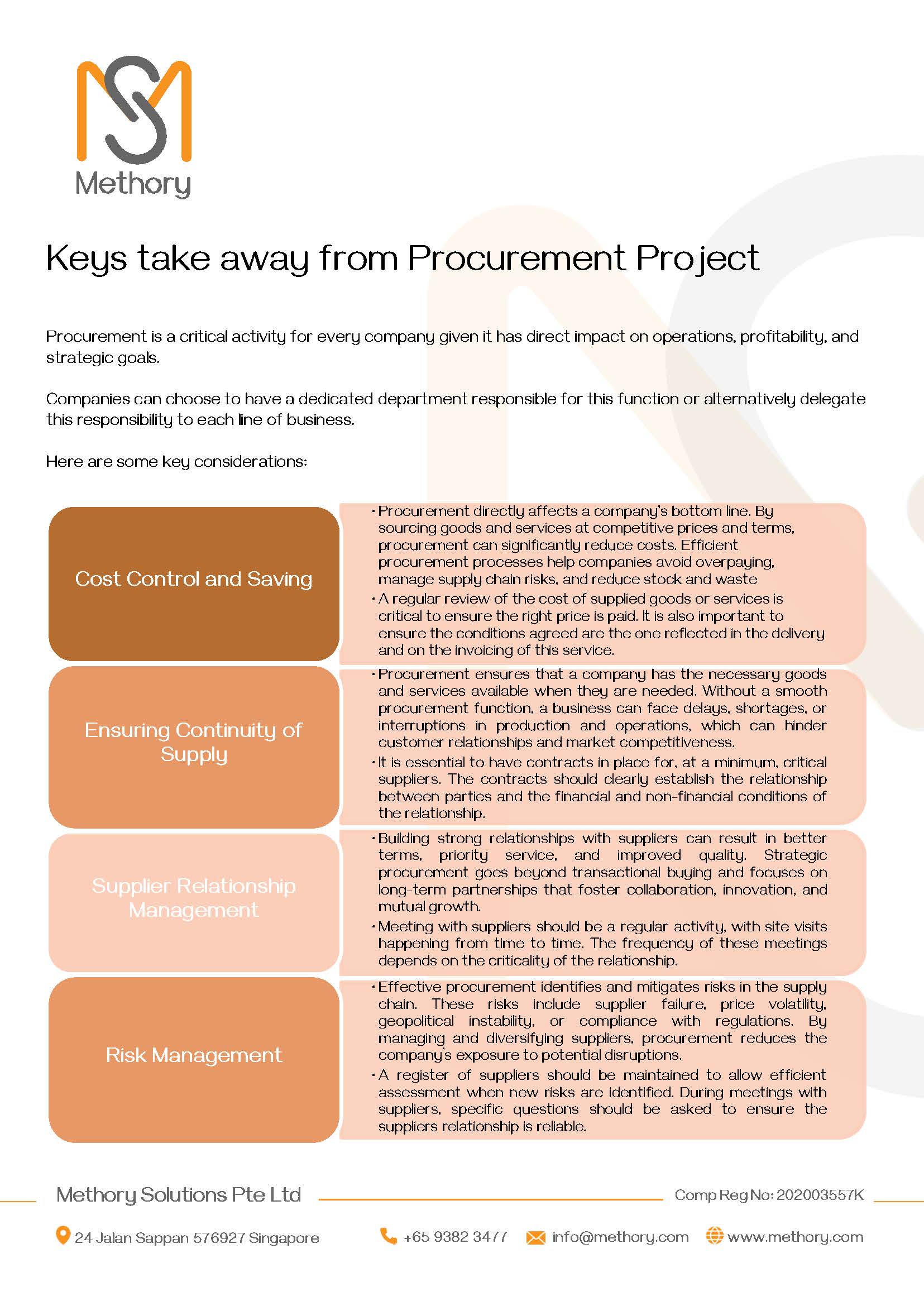
Cost Control and Saving

  • Procurement directly affects a company’s bottom line. By sourcing goods and services at competitive prices and terms, procurement can significantly reduce costs. Efficient procurement processes help companies avoid overpaying, manage supply chain risks, and reduce stock and waste
  • A regular review of the cost of supplied goods or services is critical to ensure the right price is paid. It is also important to ensure the conditions agreed are the one reflected in the delivery and on the invoicing of this service

Ensuring Continuity of Supply

  • Procurement ensures that a company has the necessary goods and services available when they are needed. Without a smooth procurement function, a business can face delays, shortages, or interruptions in production and operations, which can hinder customer relationships and market competitiveness.
  • It is essential to have contracts in place for, at a minimum, critical suppliers. The contracts should clearly establish the relationship between parties and the financial and non-financial conditions of the relationship.

Supplier Relationship Management

  • Building strong relationships with suppliers can result in better terms, priority service, and improved quality. Strategic procurement goes beyond transactional buying and focuses on long-term partnerships that foster collaboration, innovation, and mutual growth.
  • Meeting with suppliers should be a regular activity, with site visits happening from time to time. The frequency of these meetings depends on the criticality of the relationship.

Risk Management

  • Effective procurement identifies and mitigates risks in the supply chain. These risks include supplier failure, price volatility, geopolitical instability, or compliance with regulations. By managing and diversifying suppliers, procurement reduces the company’s exposure to potential disruptions.
  • A register of suppliers should be maintained to allow efficient assessment when new risks are identified. During meetings with suppliers, specific questions should be asked to ensure the suppliers relationship is reliable.

Quality Control

  • Procurement ensures that the goods and services sourced meet required quality standards. Poor procurement can result in inferior materials or services, which can hurt product quality, customer satisfaction, and the company’s reputation.
  • The control extends to the quality of the information which is provided by the suppliers. This information could be used on other processes to generate analysis and make decisions.

Innovation and Market Competitiveness

  • Supplier relationships can drive innovation by sourcing groundbreaking products and services. It can also help the company stay competitive by ensuring that it has access to the latest technologies or market-leading suppliers.
  • Regular discussions with existing or new suppliers keeps the company informed of the market conditions. It can generate ideas for new markets or efficient approaches to current operations.

Compliance and Ethical Standards

  • A methodical approach to procurement for ensures that the company’s suppliers comply with ethical, legal, and regulatory standards. This includes sustainability practices, fair labour conditions, and responsible sourcing, which are increasingly important in today’s global business environment.
  • A review of the procurement policy should be scheduled on a periodic basis to ensure that the policy remains current with the standards ande evolving environment. Training of staff will ensure a common understanding across the company.

Financial Forecasting and Budgeting

  • Procurement has a direct impact on a company’s financial health. By predicting costs, negotiating contracts, and managing expenses, procurement plays a vital role in budgeting and financial planning.
  • Appropriate sizing contracts and number of suppliers allow the identification of needs for long term changes in term of investments or recruitment.

Efficiency and Streamlined Operations

  • Effective procurement processes streamline operations by automating tasks, improving communication with suppliers, and integrating with other business functions such as inventory and finance. This enhances productivity and reduces unnecessary delays or complexities.
  • Introduction or improvement of systems will ensure the data and the flow is controlled and transparency on pain point are identify and rectified.

Strategic Alignment

  • In more companies, procurement is aligned with broader corporate goals, such as sustainability, innovation, or growth into new markets. It supports these goals by ensuring that the goods and services acquired fit into the company’s overall strategy.

Next Steps

Procurement is not just a support function; it is a strategic component of a company’s success. By ensuring cost efficiency, mitigating risks, and fostering innovation, procurement helps businesses thrive in competitive and ever-changing markets.

A procurement team is a real asset when paired with business line specialists who can partner together to articulate the company needs and find the best competitive solutions.

When procurement is delegated to teams, training and collaboration between the team becomes essential to build a company culture of procurement. Regular forums need to be organised to share best practice, supplier relationships and identify risks.

Methory Solutions can assist companies in establishing or improving an effective and efficient procurement framework adapted to the size and the dynamic of each company. We can help you to:

  • Review and reduce your expenses,
  • Meet and negotiate with your suppliers,
  • Review and improve your processes,
  • Establish a procurement framework and policy
  • Assist in integrating procurement into your strategy
  • Reinforce awareness of your staff on the importance of procurement.

Contact us at [email protected] for a meeting.